

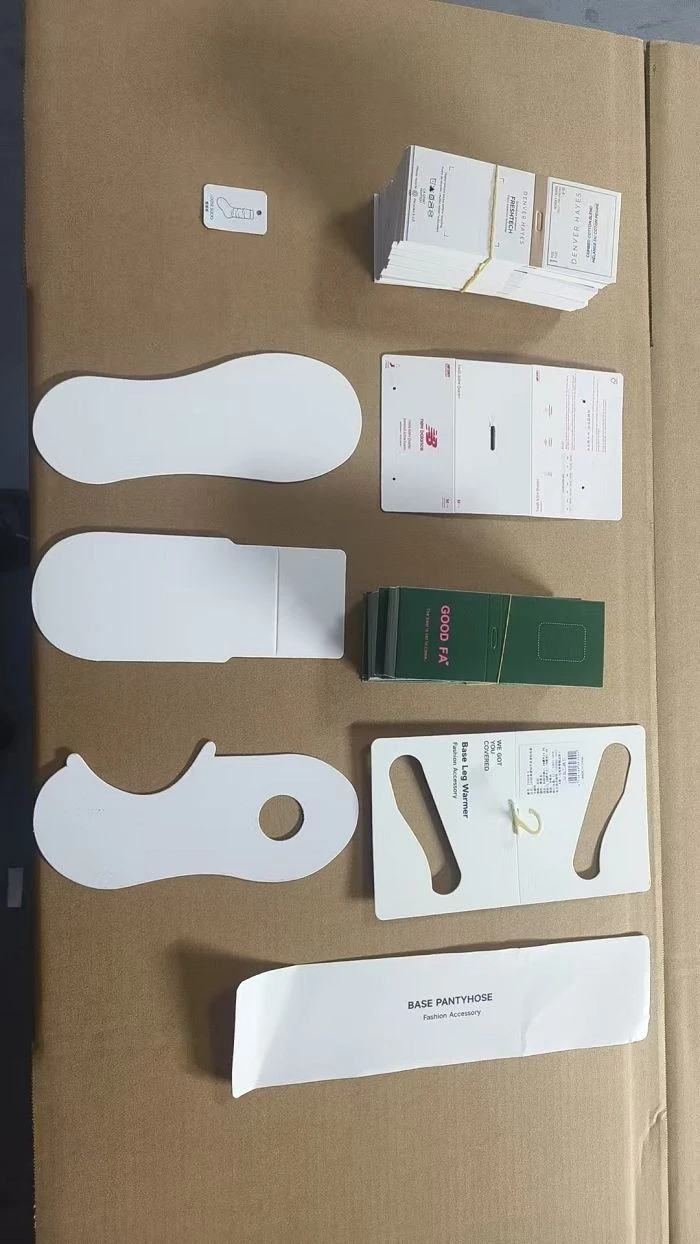
Hey there, sock lovers and retailers! As a supplier of Sock Sleeve Packaging, I've seen firsthand how crucial it is to get the packaging size right for different sock types. In this blog post, I'm gonna share some tips on how to adjust the size of sock sleeve packaging to suit various kinds of socks.

Why Does Packaging Size Matter?
First off, let's talk about why the size of the sock sleeve packaging is such a big deal. Well, for starters, it's all about presentation. When customers are browsing the shelves, they're gonna be drawn to socks that are neatly and attractively packaged. If the packaging is too big, the socks might look lost and unappealing. On the other hand, if it's too small, the socks could be squished and damaged, which is a definite no - no.
Proper packaging size also affects storage and shipping. If your packaging is too large, you're wasting space in your warehouse and paying more for shipping. If it's too small, you might have issues with items getting stuck in the packaging machinery or not fitting through the automated sorting systems.
Understanding Different Sock Types
Before you can adjust the packaging size, you need to understand the different types of socks out there.
Ankle Socks: These are short socks that only cover the ankle. They're usually pretty small and lightweight. When packaging ankle socks, you can go for a relatively compact sleeve. The idea is to keep the packaging snug enough to hold the socks in place but not so tight that they're deformed.
Crew Socks: Crew socks reach up to the calf. They're longer than ankle socks, so you'll need a bigger sleeve. Make sure the packaging has enough length to accommodate the full height of the socks without folding them awkwardly.
Knee - High Socks: As the name suggests, knee - high socks go up to the knee. These require an even larger sleeve. You may also want to consider how the socks are folded or rolled inside the packaging. A well - thought - out folding method can make the knee - high socks fit more neatly in the sleeve.
Compression Socks: These are designed to apply pressure to the legs. They're often thicker and more elastic than regular socks. When packaging compression socks, you need to account for their stretch and bulk. A slightly larger sleeve might be necessary to prevent the socks from losing their shape.
Measuring Socks for Packaging
Now that you know the different sock types, it's time to measure them. Here's a simple way to do it:
- Length: Lay the sock flat on a surface and measure from the top of the sock (where it would sit on your leg) to the tip of the toe. This will give you the overall length of the sock.
- Width: Measure the widest part of the sock, usually around the ball of the foot. Make sure to measure the sock when it's in a relaxed state, not stretched out.
- Bulk: For thick or multi - layer socks, you might need to take into account the bulk. You can do this by gently squeezing the sock and estimating how much extra space it takes up compared to a regular - thickness sock.
Once you have these measurements, you can start adjusting the size of the Sock Packaging Card or Socks Packaging Sleeve.
Adjusting the Packaging Size
There are a few ways to adjust the packaging size to fit different sock types:
Customizing the Dimensions
If you have a specific sock type that you want to package, you can work with a packaging manufacturer to create custom - sized sleeves. For example, if you sell a lot of knee - high sports socks, you can get sleeves made that are long enough and wide enough to hold them comfortably.
Using Adjustable Packaging
Some packaging designs allow for a bit of flexibility. For instance, you can use sleeves with elastic bands or expandable panels. These types of packaging can stretch to accommodate different sizes and thicknesses of socks.
Folding and Rolling Techniques
How you fold or roll the socks inside the packaging can also make a big difference. For example, if you have a pair of long socks that don't quite fit in a standard - sized sleeve, you can try folding them in half lengthwise or rolling them up tightly. This can reduce the overall size of the socks and make them fit better in the packaging.
Testing the Packaging
Once you've made the adjustments, it's important to test the packaging. Here's what you can do:
- Visual Inspection: Just look at how the socks look inside the packaging. Are they neatly arranged? Do they look presentable? If the socks are bunching up or looking messy, you might need to make further adjustments.
- Functionality Test: Try opening and closing the packaging a few times. Make sure it's easy to access the socks but still provides enough protection. Also, check if the packaging can withstand some gentle handling without falling apart.
- Shipping Test: If possible, send a few packages through the shipping process to see how they hold up. Look for any signs of damage or shifting inside the packaging.
The Importance of Consistent Packaging
While it's important to adjust the packaging size for different sock types, it's also crucial to maintain a certain level of consistency. Customers like to see a cohesive brand image, so try to keep the overall design and style of your packaging the same across different sock sizes. You can add some branding elements, such as your logo or color scheme, to make your packaging instantly recognizable.
Contact Us for Your Packaging Needs
If you're in the market for high - quality Sock Sleeve Packaging, we're here to help. We have a wide range of options available, and we can work with you to create custom - sized packaging for your specific sock types. Whether you're a small boutique or a large - scale retailer, we've got the expertise and resources to meet your needs. Reach out to us to start a discussion about your packaging requirements and let's take your sock business to the next level!
References
- Smith, J. (2020). Best Practices in Product Packaging. Packaging Press.
- Johnson, R. (2021). The Impact of Packaging Design on Consumer Perception. Marketing Journal.


